

Electric tankless water heater requirements substantial electrical capacity, multiple 240-volt circuits, and a panel assessment before installation. The exact requirements depend on the unit’s wattage, manufacturer specifications, and your home’s existing electrical service. Gas tankless models generally use much less electricity for controls and ignition, although some models have additional electrical requirements. Before buying an electric tankless water heater, Memphis homeowners should have a licensed electrician evaluate available panel capacity, existing household loads, and the circuits the selected unit requires. This guide explains how to check those requirements, when an electrical upgrade may be necessary, and how to budget for the work.
Key Takeaways
- Whole-home electric tankless water heaters can require multiple dedicated 240-volt circuits; exact requirements vary by model.
- Gas tankless models generally use electricity for controls, ignition, and sometimes a fan or pump.
- A 100-amp or 200-amp panel cannot be judged suitable from its rating alone; a load calculation is essential.
- Circuit installation, permits, and inspections depend on applicable code requirements and the project scope.
- Operating costs depend on hot-water demand, energy consumption, and the applicable MLGW electricity rate.
- An electrical assessment before purchasing the unit can help identify upgrade costs and prevent installation delays.
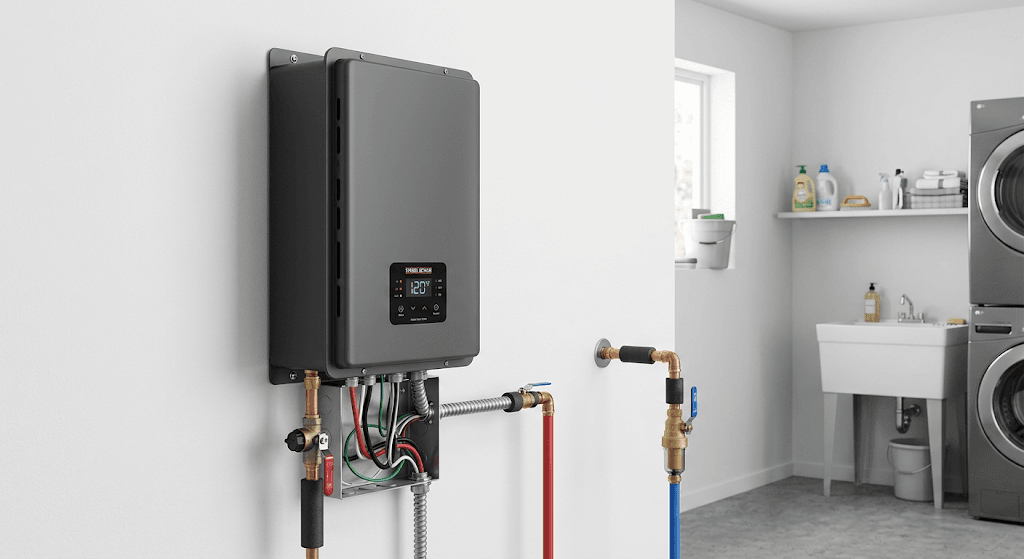
Electric vs Gas Tankless: The Electrical Difference Is Significant
Before getting into circuit requirements, it helps to understand why electric and gas tankless units are such different projects from an electrical standpoint.
A gas tankless heater burns fuel to heat water. Electricity plays a minor supporting role, the controls, igniter, and fan need a small amount of power, but the heating itself is entirely gas-driven. That makes gas tankless installations a modest electrical job.
An electric tankless heater does everything with electricity. It heats water on demand using high-powered resistive elements, which means drawing a large amount of current continuously during use. That is where the panel capacity question becomes critical.
Electric vs Gas Tankless: Electrical Requirements Side by Side
| Feature | Electric tankless | Gas tankless |
|---|---|---|
| Electrical supply | Commonly 240V for larger residential models | Often 120V; some models differ |
| Electrical load | Can be substantial, depending on model | Generally much lower |
| Circuit requirements | Follow manufacturer specifications and applicable code | Follow manufacturer specifications and applicable code |
| Panel upgrade | May be necessary after load calculation | Less likely to be needed solely for the heater |
| Installation | May require multiple new circuits | May require an outlet or dedicated circuit, depending on model |
| Total project cost | Depends on circuits, wiring, and panel capacity | Depends on electrical, gas, venting, and plumbing work |
If you are considering a gas tankless unit, the electrical side is straightforward. If you are considering an electric unit for whole-home use, the electrical work is the most significant part of the project.
What Electrical Capacity Does an Electric Tankless Water Heater Actually Need?
The numbers here catch most homeowners off guard. A standard tank water heater uses a 30-amp, 240-volt circuit, a simple dedicated circuit most Memphis homes already have. An electric tankless unit is a fundamentally different load.
Electric Tankless Water Heater Requirements by Unit Type
| Requirement | What to verify |
|---|---|
| Voltage | The selected unit’s nameplate and installation manual |
| Wattage | Maximum rated electrical input |
| Circuit count | Number of circuits specified by the manufacturer |
| Breaker size | Manufacturer instructions and applicable electrical code |
| Wire size | Circuit rating, conductor material, installation conditions, and code |
| Panel capacity | Electrician’s load calculation, including existing household loads |
Do not choose a breaker based on a generic tankless water heater sizing chart. Check the exact model’s installation manual and nameplate, then have a qualified electrician determine the required breakers, conductors, circuit configuration, and available service capacity. Point-of-use units also vary, so their requirements should not be assumed to fit one standard breaker size.
Whole-home electric tankless water heaters can place substantial demands on a home’s electrical system. The required amperage, number of circuits, breaker sizes, and conductor specifications vary by model. A qualified electrician should review the manufacturer’s installation manual and calculate the home’s existing and proposed electrical loads before determining whether the current service can support the unit.
Point-of-use models generally serve smaller hot-water demands, but their electrical requirements also vary. Check the specifications for the exact model rather than assuming that a particular breaker size or existing panel will be suitable.
According to ExpertCE, a licensed electrician continuing education provider, whole-home electric tankless units often require multiple dedicated 240V circuits and frequently necessitate a service panel upgrade to accommodate the total load. ExpertCE: Electric Tankless Water Heater Installation Guide
Does Your Memphis Home’s Panel Support an Electric Tankless Water Heater?
This is the question that determines whether your project starts at the water heater or at the electrical panel.
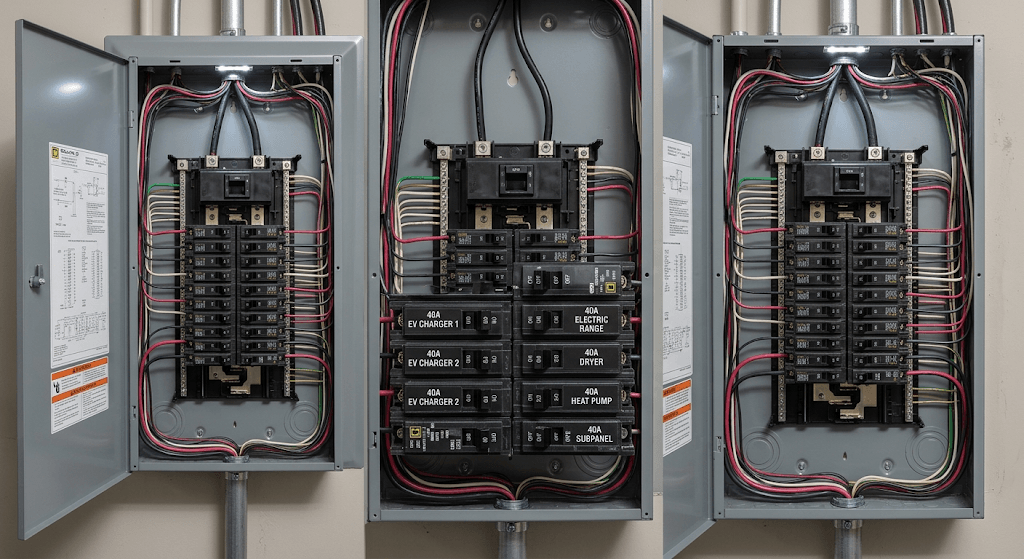
Memphis homes vary in electrical service capacity, even when they were built in the same decade. A home’s age does not establish whether its panel can support an electric tankless water heater. The electrician should identify the service rating, evaluate existing loads, review the proposed unit’s specifications, and complete the required load calculation before recommending a panel upgrade.
A licensed electrician should assess these four things before any tankless work begins:
- Total panel amperage (100A vs 200A service)
- Number of available breaker slots
- Current load from HVAC, kitchen appliances, EV charger, and other major draws
- Whether the existing neutral and grounding are adequate for the added load
Panel Capacity: What Memphis Homeowners Should Check
| Existing electrical service | What homeowners should know |
|---|---|
| 60–100 amps | A high-demand electric tankless unit may require electrical upgrades. A load calculation is essential. |
| 125–150 amps | Suitability depends on the heater’s requirements and other household loads. |
| 200 amps | Greater service capacity does not guarantee sufficient available capacity for the proposed unit. |
| Older or damaged panel | Have the panel’s condition, compatibility, and capacity evaluated before adding circuits. |
A panel upgrade from 100-amp to 200-amp service in Memphis typically costs $1,500 to $4,000 depending on the panel brand, service entrance condition, and whether MLGW service work is needed at the meter. For a detailed breakdown of what that involves locally, see Ace Electric’s guide to electrical panel upgrade cost in Memphis.
What the Electrical Installation Actually Involves
Understanding the steps prevents scope surprises mid-project.
Step 1: Panel assessment and load calculation. Before any materials are ordered, a licensed electrician evaluates the existing panel capacity, calculates the total household load, and determines whether the service can support the new water heater circuits. This step is non-negotiable and should happen before you buy the unit.
Step 2: Panel upgrade (if required). If the existing service cannot support the load, the panel upgrade happens first. On a 100-amp service, upgrading to 200-amp typically involves the electrician, a permit, and coordination with MLGW for the meter and service entrance work.
Step 3: Circuit installation. The electrician installs the circuits, conductors, and overcurrent protection required for the selected water heater and the applicable electrical code. The exact configuration depends on the manufacturer’s instructions and the home’s existing electrical system.
Step 4: Permits and inspection. Confirm the permit and inspection requirements with the relevant Memphis and Shelby County code-enforcement authority before work begins. The electrician should identify which permits apply, confirm who will obtain them, and arrange any required inspection.
Step 5: Coordination with plumber. The plumber handles the water connections; the electrician handles the circuits. Both need to be on-site at appropriate stages. If you are managing the project yourself, make sure both trades are scheduled to complete before the unit is activated.
What Does This Electrical Work Cost in Memphis?
Costs depend on whether a panel upgrade is needed and how many circuits the unit requires.
Tankless Water Heater Electrical Work Cost: Memphis, TN (2026)
| Scope of Work | Estimated Cost |
|---|---|
| Panel assessment and load calculation | $100 – $300 |
| Single dedicated 240V circuit (point-of-use unit) | $300 – $700 |
| Multiple 240V circuits (whole-home unit, 3–4 circuits) | $900 – $2,000 |
| Panel upgrade from 100A to 200A (if required) | $1,500 – $4,000 |
| Full project: panel upgrade + whole-home tankless circuits | $2,500 – $6,000 |
| Permit fees (Memphis and Shelby County) | Included in most licensed electrician quotes |
The following figures are budgeting estimates, not verified fixed prices for every Memphis installation. Actual costs depend on circuit length, wall access, equipment specifications, permit fees, panel condition, service entrance work, and any required utility coordination. Obtain itemized local quotes before publishing these ranges as current market prices.
The electrician cost is a fixed part of any electric tankless project. It is not optional and it is not a line item that can be reduced by going with an unlicensed installer. Unpermitted electrical work for a 240-volt high-draw appliance creates insurance and home-sale liability that far exceeds the cost of doing it correctly.
What Does Running an Electric Tankless Water Heater Actually Cost in Memphis?
The operating cost of an electric tankless water heater depends on how much hot water a household uses, the energy required to heat that water, the incoming water temperature, and the applicable electricity rate. To estimate annual cost, multiply annual electricity consumption in kilowatt-hours by the actual rate per kilowatt-hour shown on the household’s bill. Treat any single annual figure as an example, not a guaranteed cost for Memphis households.
For context, a traditional electric tank water heater typically costs more annually because it maintains water temperature around the clock, even when no hot water is being used. The tankless unit heats only on demand, which is where the energy efficiency argument comes from.
Annual Running Cost Comparison at MLGW Rates ($0.131/kWh)
| Water Heater Type | Est. Annual Energy Cost Memphis | Notes |
|---|---|---|
| Electric tankless (whole-home) | ~$430/yr | On-demand heating only |
| Electric tank (standard) | ~$550–$650/yr | Constant standby heating loss |
| Gas tankless | $150–$250/yr (gas cost) | Dependent on gas rates, not MLGW |
| Heat pump water heater | ~$200–$250/yr | Most efficient electric option |
The $200 to $220 annual savings over a standard electric tank heater is real but not dramatic at Memphis electricity rates. Gas tankless still runs cheaper annually when gas prices are stable. The decision between electric and gas tankless should factor in your home’s gas connection status, the panel capacity situation, and the installation cost of each option, not just the running cost in isolation.
Memphis Homes That Need a Panel Assessment Before Buying a Unit
If your home falls into any of these categories, schedule the electrical assessment before purchasing an electric tankless water heater, not after.
- Older homes: Electrical service capacity varies by property, regardless of construction year. Have an electrician assess the panel, existing household loads, and selected water heater before deciding whether an upgrade is necessary.
- Federal Pacific or Zinsco panel: If your home has one of these older panel types, ask a qualified electrician to assess its condition, safety, and suitability for the proposed installation before adding new circuits.
- Already has an EV charger, electric range, or electric dryer, These are high-draw circuits. Adding a tankless water heater on top may exceed panel capacity even on a 200-amp service without a load calculation.
- Has had frequent breaker trips from kitchen or HVAC loads, A panel already operating near capacity is a sign the water heater addition needs careful engineering, not just another circuit.
For homes where broader energy efficiency upgrades are also planned alongside a water heater change, Ace Electric’s energy-efficient electrical solutions for Memphis homes covers what those projects typically involve.
How to Choose an Electrician for Tankless Water Heater Wiring in Memphis
Not every licensed electrician regularly handles high-amperage water heater circuit work. Before committing to any quote, confirm:
- Active Tennessee state electrical license
- Experience with 240-volt dedicated circuit installation specifically
- Ability to perform a full load calculation before quoting, not just a per-circuit price
- Willingness to flag panel issues before the water heater is purchased rather than after
- A written estimate that separates the panel assessment, circuit work, and any panel upgrade into distinct line items
- Confirmation that permit and inspection are included in the quoted scope
One practical step worth taking: ask the electrician whether a panel upgrade is likely before you commit to an electric unit. If the answer comes back without a panel inspection, that is a sign the quote is not accounting for the full scope of the project.
Frequently Asked Questions
What size breaker does a tankless water heater need?
The required breaker size depends on the model’s electrical rating, installation instructions, circuit configuration, and applicable electrical code. Check the exact unit specifications before purchasing equipment or planning new circuits.
Does a tankless water heater need a dedicated circuit?
Many electric tankless models require dedicated circuits, and the exact arrangement depends on the manufacturer and applicable code. Gas models generally have much smaller electrical loads, but their connection requirements also vary.
Can a 100-amp panel support an electric tankless water heater?
Do not assume it can or cannot based on the panel rating alone. Many whole-home electric tankless models place substantial demands on the electrical system. An electrician must evaluate the specific model and calculate the home’s existing and proposed loads.
How much does tankless water heater electrical work cost in Memphis?
Costs depend on the number of circuits, wiring distance, accessibility, permit requirements, and whether a panel or service upgrade is necessary. Request an itemized estimate after an electrician assesses your home.
Does Memphis require a permit for tankless water heater electrical work?
Permit requirements depend on the work involved and the applicable local rules. Confirm the requirements with Memphis and Shelby County code enforcement before installation begins.
Is an electric or gas tankless water heater a better choice for Memphis homes?
It depends on your home’s existing setup. Gas tankless units generally have lower electrical demands, while their total operating costs depend on gas prices, electricity use, and household hot-water demand. Compare local utility rates and installation costs before choosing between gas and electric. Electric units make sense when there is no gas line available or when a panel upgrade is already planned for other reasons. The right answer starts with a panel assessment and a comparison of total installation cost, not just the unit price.
Final Word
The electrical side of a tankless water heater installation is where most projects stall. A whole-home electric tankless water heater can place substantial demands on a home’s electrical system. Discovering that your existing service needs upgrades after purchasing the unit can add unexpected costs and delays.
The right sequence is: panel assessment first, unit selection second, installation third. A licensed electrician can tell you within one visit whether your panel supports the load, what it would cost to upgrade if it does not, and what the full electrical scope looks like before you commit to anything.
Planning a tankless water heater installation in Memphis, Germantown, Bartlett, Collierville, Cordova, or Millington? Contact Ace Electric to discuss your electrical requirements and determine whether a panel assessment is appropriate before selecting your unit.