
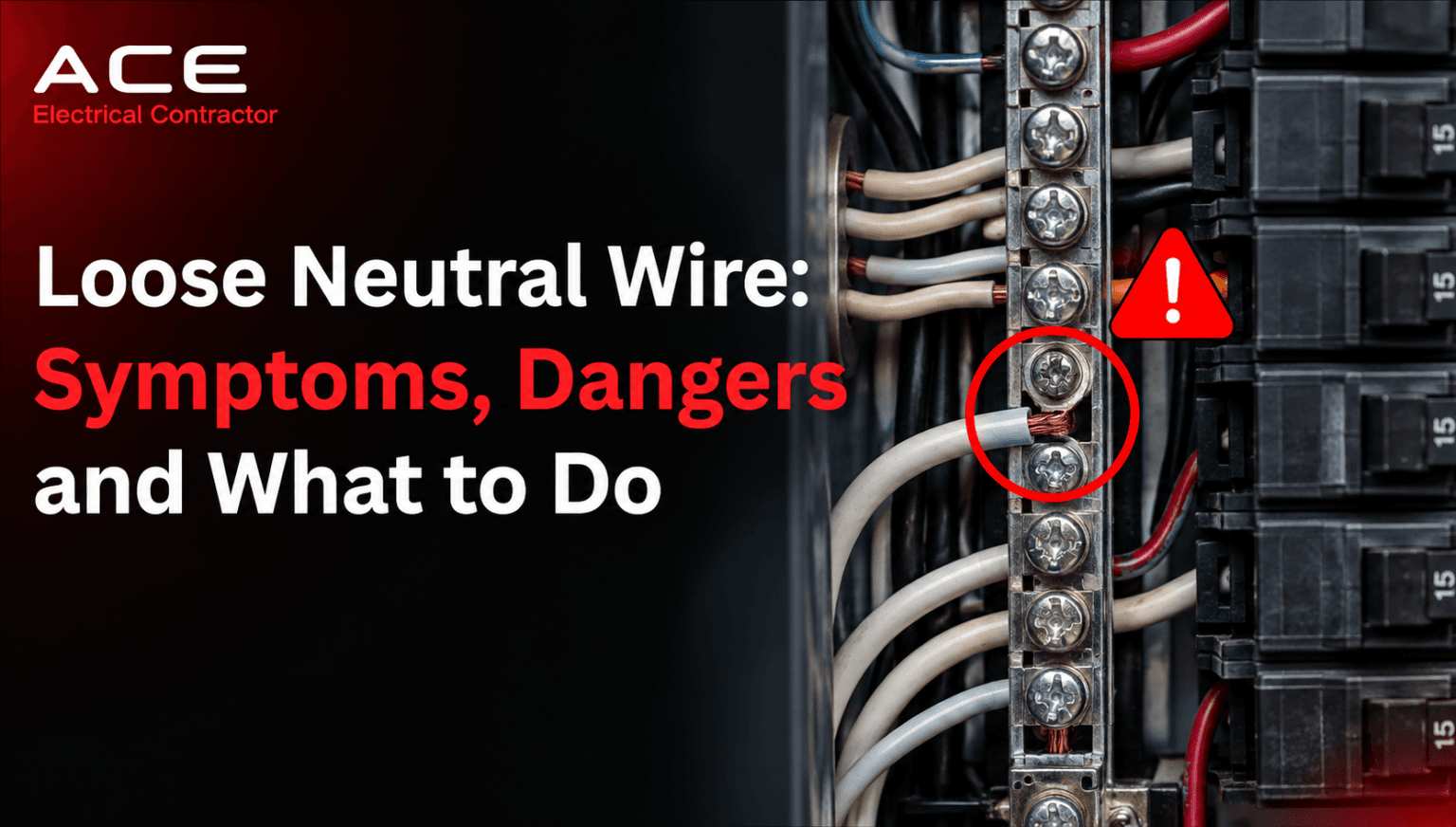
A loose neutral wire symptoms can create a voltage imbalance between the two 120-volt legs of a split-phase system. Instead of both legs staying near their expected voltage relative to neutral, one side can drop while the other rises, with the exact readings depending on the loads connected to each leg. In severe cases, the imbalance can expose appliances and electronics to damaging overvoltage.
Key Takeaways
- A loose neutral wire can create voltage imbalance, causing one side of a split-phase system to run below or above its expected voltage and potentially damage electronics and appliances
- The most telling symptom is lights that change brightness when large appliances switch on or off, not just a flicker, but a visible shift
- A loose neutral connection may not trip a conventional circuit breaker because the problem can involve voltage imbalance rather than an overcurrent condition.
- breaker is primarily designed to respond to excessive current, so it may not provide a warning for a neutral connection problem.
- Homes with aluminum wiring (1965 to 1973) and older panels are most at risk because connections loosen naturally over decades of thermal expansion
- Professional diagnosis and repair costs $150 to $350 for most homes, far less than replacing appliances damaged by sustained overvoltage
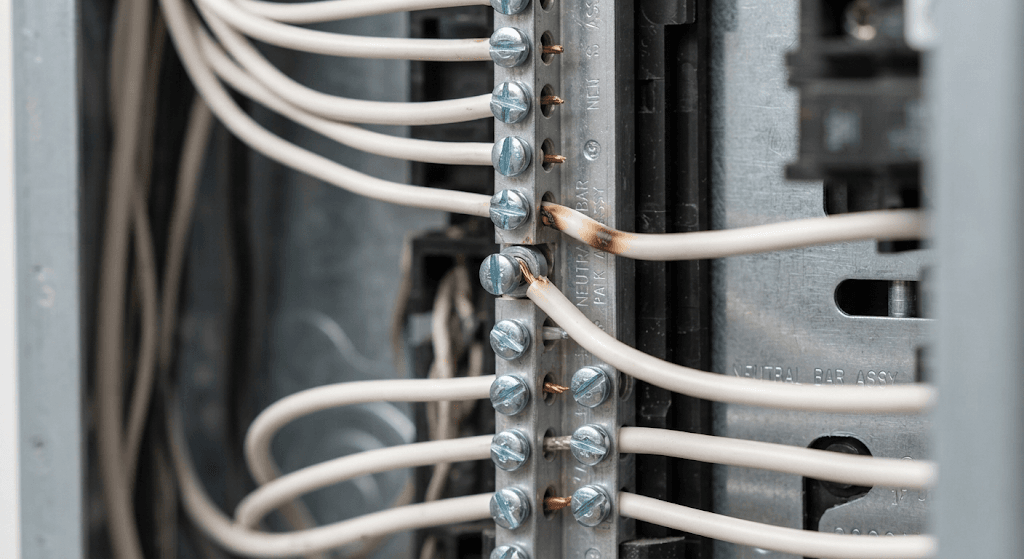
What a Loose Neutral Wire Actually Does
Your home’s electrical system runs on split-phase 240V service. Two hot wires come in from the utility, each carrying 120V relative to neutral, and the neutral wire completes the return path back to the transformer. When that neutral connection is solid, voltage stays balanced and stable on both sides.
When the neutral loosens, the system’s behavior changes in a way most homeowners don’t expect. The two hot legs are still connected to each other through the transformer with 240V between them. But without a solid neutral, that voltage doesn’t divide evenly. Instead, it splits based on whatever loads happen to be running. A heavy appliance on one side pulls voltage down on that leg. The other leg, with lighter load, shoots up to compensate.
That’s the physics behind why a loose neutral is more dangerous than most electrical faults. It’s not just a circuit that stops working. It’s a circuit running at the wrong voltage, silently.
Loose Neutral Wire Symptoms: What to Look For
Some of these are obvious. Others are easy to attribute to aging appliances or “just how old wiring is”, which is exactly how loose neutrals stay undetected for so long.
Full Symptom List
| Symptom | What It Looks Like | Why It Happens |
|---|---|---|
| Lights change brightness when appliances switch on | A lamp dims when the dryer starts, then brightens when it stops | Load shift on one leg causes voltage to redistribute |
| Lights flicker across multiple rooms simultaneously | Not one light, several flickering at once | Neutral failure affects the whole panel, not just one circuit |
| Appliances running unusually hot | Refrigerator motor running warm, TV chassis warm | Overvoltage causes motors and transformers to overwork |
| Electronics dying earlier than expected | Chargers, smart TVs, gaming consoles failing within months | Sustained overvoltage degrades components without triggering protection |
| Lights that seem too bright at certain times | Bulbs burning noticeably bright with no explanation | That circuit leg is receiving above-normal voltage |
| Burning smell from panel or outlets | Faint plastic or burning smell near the breaker box | Heat buildup from a poorly conducting neutral connection |
| Buzzing from outlets or light fixtures | Low hum from wall outlets or ceiling fixtures | Voltage instability causes electromagnetic buzz in connected devices |
| Complete loss of power to some circuits | Specific circuits dead while others work normally | Severely loose neutral can create an open circuit on one leg |
The most recognizable loose neutral wire symptoms are lights that change brightness when appliances turn on or off, flickering across multiple rooms, unusually bright lights, unexplained electronics failures, and signs of overheating near electrical connections. Multiple symptoms occurring together are more concerning than an isolated flickering bulb.
The symptom that separates a loose neutral from almost everything else: lights that visibly brighten when a large appliance turns off, or dim noticeably when one turns on. A flickering light from a failing bulb flickers randomly. A loose neutral causes a directional shift, bright to dim, or dim to bright, tied to appliance activity.
How This Is Different From a Loose Ground or Tripped Breaker
These three faults get confused, and the difference matters.
Neutral vs Ground vs Tripped Breaker
| Fault | What It Affects | Does It Trip Breaker? | Voltage Danger? |
|---|---|---|---|
| Tripped breaker | Single circuit, stops working | YES, circuit goes dead | None, power off |
| Loose ground wire | Safety path only | Usually no | Low, ground is not a current-carrying conductor |
| Loose neutral wire | One circuit or multiple circuits, depending on where the neutral connection has failed | Usually no | Potentially high, especially with a service-neutral fault |
The ground wire is your safety net. Losing it is serious, but it doesn’t change the voltage reaching your devices. A loose neutral changes the voltage actively. Your circuit breaker monitors current, not voltage, so it has no mechanism to detect or respond to a neutral fault. That’s what makes it so dangerous, nothing in your panel will warn you it’s happening.
What Causes a Neutral Wire to Come Loose
Connections don’t fail randomly. There are patterns.
Thermal cycling. Every time current flows through a connection, it generates heat. The connection expands slightly. It cools and contracts. Over years and decades, that micro-movement works terminal screws loose. Thermal cycling can contribute to connection deterioration over time, particularly where a connection was improperly tightened or is exposed to repeated heating and cooling.
Aluminum wiring. Homes built between 1965 and 1973 commonly have aluminum branch circuit wiring. Aluminum wiring responds differently to temperature changes than copper, and improperly installed or deteriorated aluminum connections can be vulnerable to overheating and connection failure. Aluminum wiring requires particular attention because connections can be vulnerable to overheating and deterioration when the wiring, terminals, or devices are not properly installed or maintained. Ace Electric’s breakdown of what this means for Memphis homes by build era covers exactly which homes carry this risk.
Backstab outlet connections. From the 1970s through the 1990s, many electricians used “backstab” or push-in connector outlets instead of screw terminals. Spring-loaded clips hold the wire in place. Push-in connections can be a concern when troubleshooting an older or problematic circuit, so an electrician may inspect these connections when investigating intermittent electrical symptoms
Corrosion. Moisture in walls, basement humidity, or any water intrusion near wiring can oxidize neutral connections. Oxidized connections carry current poorly and generate excess heat, which accelerates the loosening cycle.
Original installation errors. Under-tightened terminal screws from the initial installation can start failing faster than properly torqued connections. This isn’t rare; electrical inspections regularly find neutral connections that were never properly seated.
Where Loose Neutrals Are Found Most Often
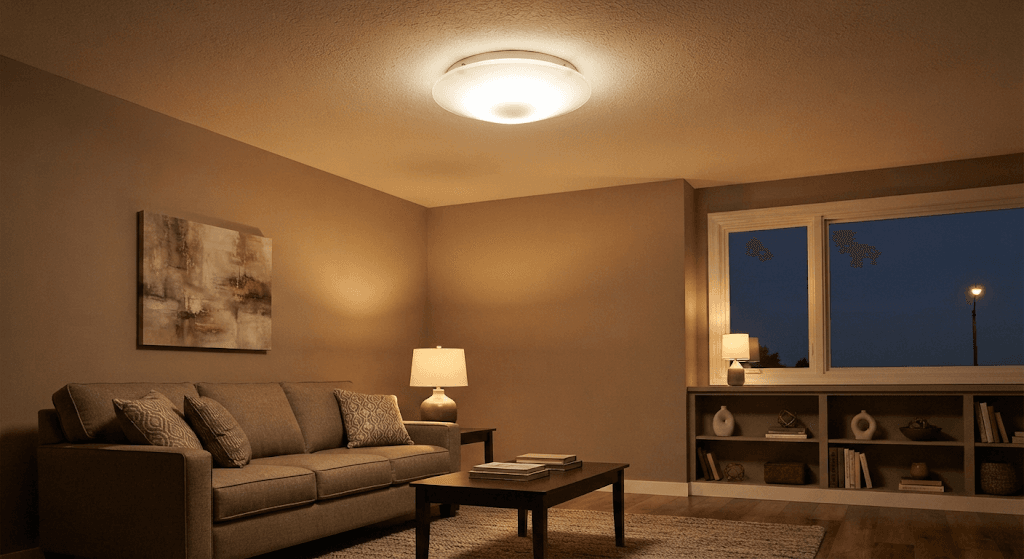
The connection can fail anywhere along the neutral path from your outlets back to the panel.
Most Common Locations for Neutral Failures
| Location | Who Is At Risk | What the Fix Involves |
|---|---|---|
| Main panel neutral bar | All homes, especially 20+ years old | Panel inspection, tighten or replace terminal connection |
| Individual outlets | Homes with backstab outlets, aluminum wiring | Replace outlet with proper screw-terminal connection |
| Junction boxes | Older homes, any DIY wiring work | Open box, inspect, re-terminate or add wire connector |
| Meter base | All homes | This is utility-side, requires utility company involvement |
| Aluminum-to-copper splices | 1965 to 1973 builds | Requires CO/ALR rated connectors or COPALUM pigtails |
A loose connection at the service neutral can affect voltage throughout the home, while a loose branch-circuit neutral may affect only one circuit or a smaller portion of the electrical system. When multiple rooms show coordinated brightness changes, an electrician should investigate the panel, service, and other shared connections rather than assuming the problem is limited to one fixture.
Electrical problems can create serious fire hazards when connections overheat or arc. ESFI reports that home electrical fires account for tens of thousands of fires and more than 1,000 injuries annually in the United States, while damaged or loose connections are among the conditions associated with arc faults. These figures are not specific to loose neutral connections, but they illustrate why signs of overheating, arcing, or damaged wiring should not be ignored.Electrical Safety Foundation International
How to Identify a Loose Neutral Safely
There is one useful thing homeowners can do before calling an electrician: document what you’re observing and when.
Note these details:
- Which lights or circuits show the most pronounced brightness change
- Whether the flickering or brightness shift happens at consistent times (dryer running, AC cycling, dishwasher starting)
- Whether the issue is getting worse over days or weeks
- Whether you smell anything near the panel or specific outlets
That documentation helps an electrician locate the fault faster, which reduces diagnostic time and cost.
What not to do: do not open your electrical panel to look at the neutral bar. The neutral bus carries current even when individual breakers are switched off. It is not safe to inspect or touch without the proper training and equipment. Do not open junction boxes unless you are a licensed electrician. A loose neutral connection with corrosion or heat damage can arc when disturbed.
If you smell burning near the panel, hear crackling from outlets, or see scorch marks around an electrical connection, treat the situation as urgent. Stop using the affected equipment and contact a qualified electrician promptly. Do not open the panel or attempt to investigate the connection yourself.
What Loose Neutral Wire Repair Costs
Repair cost depends on where the fault is located and what condition the wiring is in when the electrician gets there.
Repair Cost by Location and Scope
| Repair Scope | Cost Range | Notes |
|---|---|---|
| Electrical inspection to diagnose | $100 – $300 | Panel opened, neutral connections checked |
| Tighten neutral bar at panel | $150 – $350 | Includes inspection, most common fix |
| Replace loose outlet (backstab to screw terminal) | $75 – $150 per outlet | Multiple outlets often need replacing in same visit |
| Repair junction box connection | $100 – $200 per box | Add-on after inspection identifies the location |
| Full neutral inspection, all connections | $200 – $450 | Whole-panel check, all circuit neutrals verified |
| Wiring damage repair (heat or arc damage found) | $300 – $1,500+ | Depends on how much wiring was affected |
The following are planning ranges, not fixed Memphis prices. Actual costs vary by electrician, diagnostic time, accessibility, wiring condition, emergency vs. scheduled service, and whether damaged components need replacement.
In straightforward cases, the electrician may be able to diagnose and correct the problem during the same service call, such as repairing a loose termination that has not caused additional damage. The electrician opens the panel, identifies the loose neutral screw, torques it to proper spec, and the fault is corrected in the same visit. Homes where the neutral has been loose long enough to cause heat damage are the ones where costs escalate.
In Memphis homes with aluminum wiring, what looks like a simple neutral tightening sometimes reveals heat-discolored aluminum connections that need to be replaced or reterminated. If your home was built between 1965 and 1973 and has never had an electrical inspection, budget for the higher end of these ranges. For context on what a full panel assessment involves if that’s where the issue leads, see Ace Electric’s guide to electrical panel upgrade cost in Memphis.
Homes Most at Risk
Not every home has equal exposure to this problem.
- Built before 1990, Panel connections haven’t been inspected or maintained in 30 to 60 years. Older homes have had more time for connections, wiring devices, and electrical components to age, so unexplained electrical symptoms warrant professional evaluation.
- Aluminum wiring era (1965 to 1973), Aluminum wiring from this era deserves particular attention because CPSC has identified overheating and connection failures as potential hazards.
- Backstab outlet installations, Any home where outlets were installed with push-in rather than screw-terminal connections.
- Any home after a major storm or power event, Power events or storms can expose existing electrical problems or damage components, especially in systems that already have deteriorated connections
- DIY electrical work without inspection,Improperly performed electrical work can leave neutral connections loose, poorly terminated, or otherwise unsafe.
What Happens If You Wait
The consequences of an unresolved loose neutral get worse over time, not better.
In the early stages, the problem shows up as flickering and appliance behavior. Annoying, but seemingly manageable. A deteriorating connection can generate heat when current passes through a compromised contact point. That heat accelerates oxidation and further loosening. Eventually the connection begins arcing, small sparks at the terminal that can ignite surrounding insulation.
The other path is financial. Sustained overvoltage damages electronics progressively. Smart home devices, televisions, refrigerator compressors, and HVAC systems all face shortened lifespans when they’re regularly exposed to voltages above their rated input. In some cases, homeowners may replace damaged appliances before the underlying electrical problem is identified.
Frequently Asked Questions
What are the main symptoms of a loose neutral wire?
The clearest sign is lights that visibly change brightness when large appliances (dryer, HVAC, dishwasher) switch on or off. Other symptoms include flickering across multiple rooms simultaneously, appliances running unusually hot, electronics failing earlier than expected, and a burning smell near the electrical panel or outlets.
Does a loose neutral wire trip the circuit breaker?
No. Circuit breakers monitor current, not voltage. A loose neutral causes voltage imbalance rather than overcurrent, so the breaker has no mechanism to detect or respond to it. This is why the fault can cause damage for extended periods without any panel warning.
How serious is a loose neutral wire?
Very serious. A loose neutral can produce damaging overvoltage on one side of the system, depending on the loads connected and where the neutral connection has failed. That overvoltage can damage electronics, cause motors and other equipment to overheat, and create a fire hazard if the connection begins overheating or arcing.
Can I fix a loose neutral wire myself?
No. The neutral bus can carry current even when individual branch-circuit breakers are switched off. Working inside a live panel without proper training and equipment is a serious safety risk. This repair requires a licensed electrician with panel access and the right tools to properly torque the connection.
How much does it cost to fix a loose neutral wire?
Many straightforward loose-neutral repairs fall in the $150 to $350 range, but the actual cost depends on where the connection failed, diagnostic time, accessibility, wiring condition, and whether heat or arc damage requires additional repairs. Outlet and junction-box repairs may cost less or more depending on the work required, while damaged aluminum wiring or extensive wiring repairs can increase the total.
How do I know if the problem is the neutral wire and not just a failing light bulb?
A failing bulb flickers in that one fixture, independently of what else is happening in the house. A loose neutral causes lights to shift brightness in a pattern tied to appliance activity, dimming when large appliances turn on, brightening when they switch off. If multiple lights across different circuits respond together, the cause is upstream of the individual fixtures.
Final Word
A loose neutral is the electrical fault most likely to be dismissed until something expensive breaks. The symptoms look like minor annoyances at first. The lights flicker. An appliance acts up. Easy to ignore or blame on aging equipment.
What’s actually happening is that your home’s circuits are running at the wrong voltage, and your panel has no way to warn you. A deteriorating connection can generate heat and damage over time, particularly when it carries significant current. If the connection begins arcing or overheating, the fire risk becomes more serious.
Older homes with aging electrical components, especially where the panel, wiring, or connections have not been inspected or updated in many years.
If you are in Memphis, Germantown, Bartlett, Collierville, Cordova, or Millington and think you may have a loose neutral, Ace Electric provides licensed residential panel inspections and electrical diagnostics across Shelby County.
Ace Electric serves Memphis, Germantown, Cordova, Bartlett, Collierville, and surrounding Shelby County communities. Licensed, insured, and locally operated.