
Dimmer switch installation is straightforward in newer homes with updated wiring, but in older Memphis homes it frequently uncovers compatibility problems that turn a simple swap into a professional job. Most dimmer switches cost $10 to $60 for the hardware, with professional installation adding $75 to $150 in labor for a single switch. Whether you need an electrician depends less on the task itself and more on what’s already inside your walls.
What a Dimmer Switch Actually Does (And Why It Matters for Installation)
A standard light switch has two positions: on or off. A dimmer switch controls how much voltage reaches the fixture, which adjusts brightness and, with the right bulbs, cuts energy use.
The catch is that dimmers don’t work universally. Getting any of these four factors wrong produces flickering lights, buzzing sounds, switches that run warm to the touch, or bulbs that won’t dim smoothly:
- The type of bulb connected to the circuit
- The number of fixtures sharing that circuit
- The age of your home’s wiring
- Whether your switch box contains a neutral wire
That’s why dimmer switch installation isn’t purely a hardware question. It’s a wiring and compatibility question first.
The Compatibility Problem Most Homeowners Don’t Expect
Walk into any home improvement store, and you’ll find dozens of dimmer switches. Most of them won’t work correctly with most LED bulbs without some research first.
Here’s the core issue. Traditional incandescent bulbs worked reliably with older dimmer technology because they’re resistive loads. LEDs are not. They run on internal driver circuits that interact unpredictably with dimmers not designed for them. According to PAC Lights, LED-compatible dimmers are specifically engineered to manage lower electrical loads, sometimes as low as 5 watts, and help prevent common symptoms like flickering and sudden brightness jumps that appear when mismatched hardware is installed.
The solution is matching an LED-rated dimmer to bulbs confirmed compatible by the manufacturer. Lutron, Leviton, and other major brands publish compatibility lists. Checking those before buying saves a return trip.
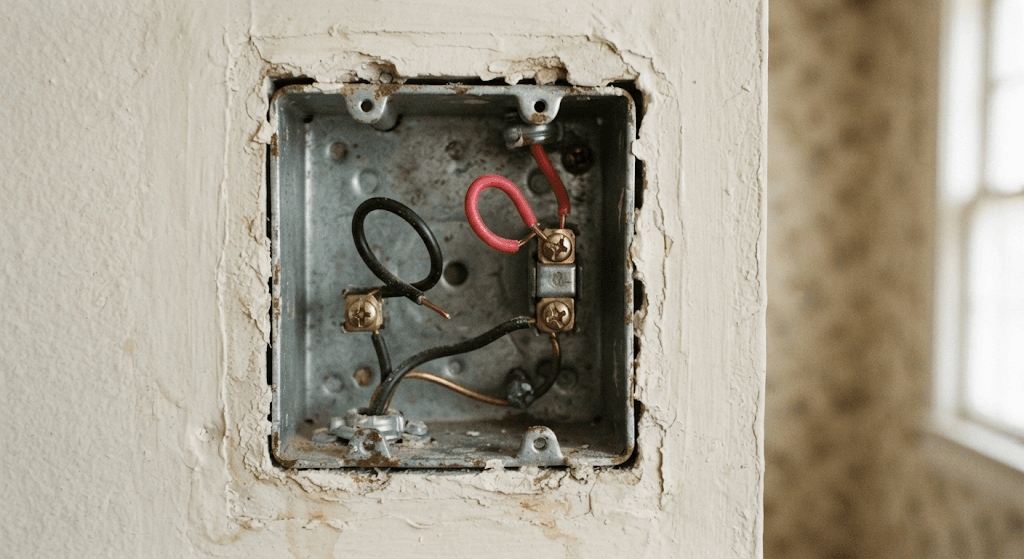
A second issue comes up in Memphis homes built before the 1980s. Many of those switch boxes were wired without a neutral wire run to the switch location. Standard switches don’t need one. Many modern dimmers, particularly smart dimmers, do. If you open the switch box and see only two wires instead of three, that’s a flag worth understanding before purchasing any dimmer.
Dimmer Switch Installation Cost in Memphis
The cost of dimmer switch installation depends on three factors: the switch itself, labor, and whether any wiring complications exist.
| Component | Typical Cost Range | Notes |
|---|---|---|
| Basic single-pole dimmer (LED-rated) | $10 to $30 | Covers most single-fixture rooms |
| 3-way dimmer (controls light from 2 locations) | $25 to $60 | Requires compatible auxiliary switch |
| Smart dimmer (app or voice control) | $40 to $120 | Often requires neutral wire |
| Electrician labor (single switch) | $75 to $150 | Flat rate or hourly depending on contractor |
| Multiple switches (same visit) | $50 to $100 per additional switch | Bulk pricing common |
| Wiring correction or neutral wire add | $150 to $400+ | Varies by access and scope |
According to HomeAdvisor, the national average for light switch installation (including dimmer switches) runs $100 to $203, with labor adding $50 to $100 per hour depending on the contractor and region. Memphis rates fall within that range, though wiring complications in older homes can push the total higher.
One practical note: a single dimmer swap is a short job for a licensed electrician. Most are completed in under an hour. If you have several switches to replace, doing them in one visit is consistently more cost-efficient than scheduling separately.
3-Way Dimmer Switches: Why They’re More Complicated
A standard single-pole dimmer controls a light from one location. A 3-way setup controls the same light from two locations, common in hallways, stairwells, and large rooms with multiple entry points.
Replacing a standard 3-way switch with a dimmer requires:
- A specific 3-way dimmer rated for your bulb type and load
- A compatible auxiliary switch at the second location
- Correct wire sequence at both boxes for the dimmer to function
You cannot simply put a standard single-pole dimmer into a 3-way circuit. The wiring configuration is different, and the load calculation has to account for both switch locations. Getting it wrong usually means the light works from one location but not the other, or the dimmer doesn’t dim at all. This is one situation where homeowners who started a DIY replacement most often end up calling an electrician partway through.
What’s Actually Inside Your Switch Box
Before any dimmer installation, a licensed electrician checks what’s already in the box. The findings determine whether it’s a quick swap or a more involved job. Here’s what matters:
Wire gauge. Most residential lighting circuits run on 14-gauge wire connected to a 15-amp breaker, or 12-gauge on a 20-amp circuit. The dimmer’s load rating needs to match.
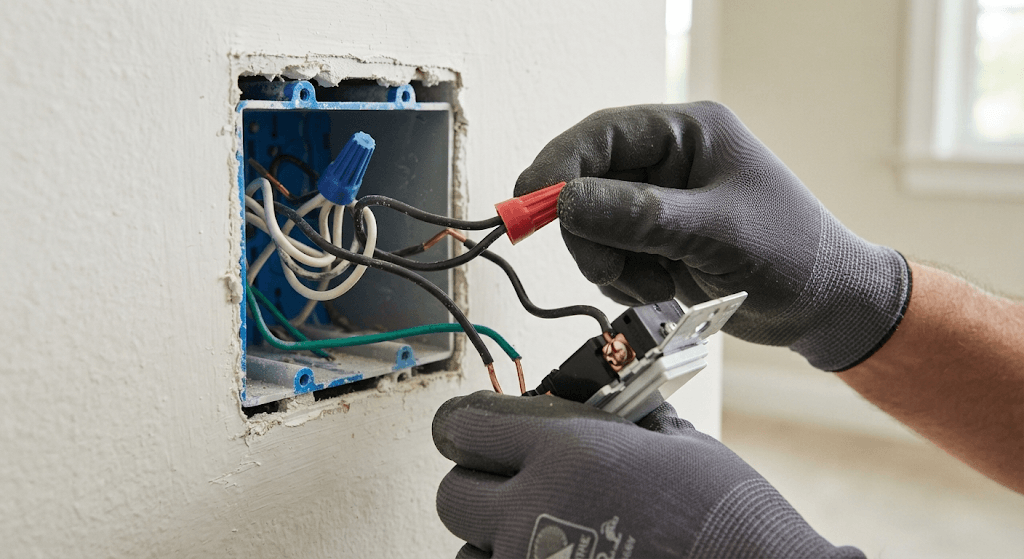
Neutral wire presence. Some smart and LED dimmers require a neutral wire at the switch box. In homes where that wire wasn’t originally run to the switch location, a licensed electrician can sometimes pull a neutral from a nearby junction box. That adds time and cost but makes the installation correct.
Wire condition. Homes in Midtown, Frayser, Whitehaven, and other older Memphis neighborhoods may have wiring that’s decades old. Brittle insulation, loose connections at the box, or signs of overheating are not things to work around. They’re things to address before adding any new hardware. If your home has aging wiring and you’re experiencing related issues, our 24/7 emergency electricians in Memphis can assess the situation quickly.
Box depth. Dimmers have more internal components than standard switches and require more depth in the electrical box. Crowded or shallow boxes occasionally require an extension ring to make room.
None of these are reasons to avoid upgrading to dimmer switches. They’re reasons to know what you’re working with before the job starts.
Common Problems After a Dimmer Switch Installation
Even correctly installed dimmers can produce frustrating results if the bulbs or circuit aren’t compatible. These are the issues that show up most often:
Flickering at low brightness. Usually a compatibility mismatch between the dimmer’s minimum load and the LED driver inside the bulb. Switching to bulbs confirmed on the dimmer’s compatibility list resolves it in most cases.
Light won’t go fully off. The dimmer is still sending a small amount of current through the circuit even at the lowest setting. This is often caused by using a 2-wire dimmer without a neutral wire alongside LEDs that are sensitive to residual current. As explained by Elliott Sound Products, standard 2-wire dimmers were designed for incandescent lamps and will behave unpredictably with LED loads. A neutral-equipped 3-wire dimmer resolves the issue reliably.
Buzzing or humming. Can come from the switch itself or from the fixture. Some LED bulbs are more susceptible to audible interference from phase-cut dimmer technology. Trying a different bulb brand sometimes eliminates it. Persistent buzzing from the switch warrants a closer look.
Warm switch plate. Dimmers generate more heat than standard switches. A slightly warm plate is normal during operation. Hot to the touch is not. A switch running hot suggests a load problem, poor wiring connection, or a switch rated below the actual circuit demand.
Limited dimming range. Some LED bulbs only dim to 20 or 30 percent before cutting off entirely. This is a bulb design issue rather than an installation error, but choosing dimmable bulbs with a wider range solves it.
When to Hire an Electrician for Dimmer Switch Installation
| Situation | DIY Reasonable? | Professional Recommended? |
|---|---|---|
| Single-pole swap, modern home, accessible box | Possibly | For certainty |
| Older Memphis home (pre-1980s wiring) | Not advised | Yes |
| 3-way or multi-location dimmer circuit | Not advised | Yes |
| Smart dimmer requiring neutral wire | Depends on wiring present | Yes if neutral missing |
| Switch box showing signs of heat or damage | No | Yes, immediately |
| Multiple switches being replaced at once | Not advised | Yes, more efficient |
| Rental property or home sale pending inspection | Not advised | Yes |
The honest answer is that the physical act of swapping a single-pole dimmer is not technically complex. The electrical fundamentals are accessible to a careful homeowner who has researched the job and is comfortable with live circuits.
What changes the calculation is what the switch box reveals when it’s opened. Older wiring, missing neutrals, or signs of heat damage are not problems to improvise around. They’re problems that need a licensed electrician.
In Tennessee, residential electrical work is regulated through the Tennessee Board for Licensing Contractors. For a straight switch swap, a permit is typically not required. For wiring corrections or new circuit work, it is.
Smart Dimmers vs. Standard Dimmers: Is the Upgrade Worth It?
Smart dimmers connect to your home’s Wi-Fi and allow control through a phone app, voice commands, or automated schedules. Here’s how they stack up against standard dimmers for different homeowner situations:
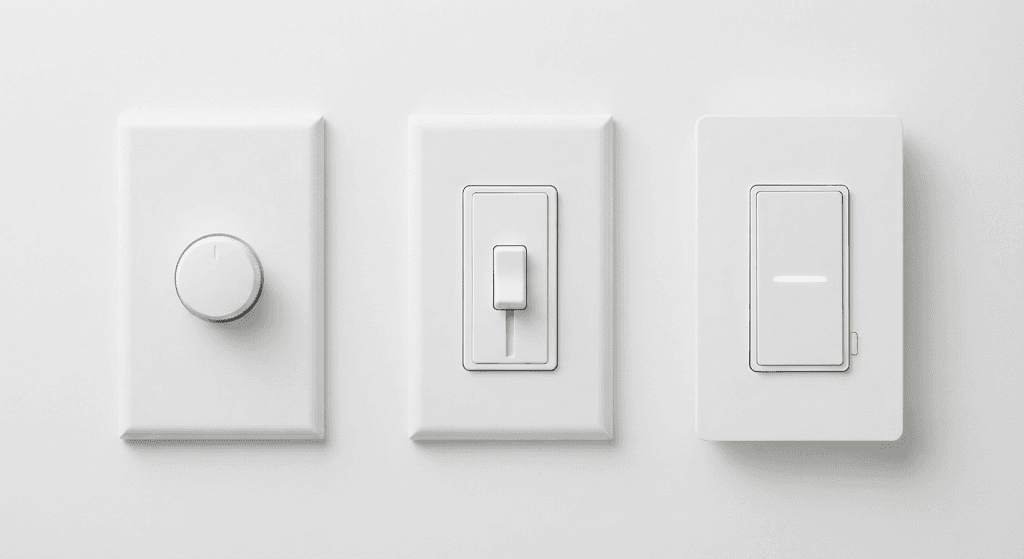
- Standard rotary or slide dimmer ($15 to $30): Best for homeowners who want adjustable brightness without added complexity. No neutral wire required in most single-pole configurations.
- Smart dimmer ($40 to $120): Best for homes already using smart home systems or where remote control and scheduling add real value. Most require a neutral wire for reliable operation.
- No-neutral smart dimmer ($45 to $90): A narrower product category for homes without neutral wires at the switch box. Works but limits brand and feature options.
The wiring requirement is the practical deciding factor. If your switch box has a neutral wire, a smart dimmer is a reasonable upgrade. If it doesn’t, either the wiring needs correction first or you need a smart dimmer specifically rated for no-neutral installations, which narrows the options and increases the price.
If you’re considering a broader smart home electrical upgrade, it often makes sense to address dimmer switches, neutral wires, and panel capacity in a single visit, especially in Memphis homes where older wiring may affect multiple systems at once. You can also read our guide on whole-home surge protection in Memphis if you’re upgrading lighting and want to protect your electronics at the same time.
Frequently Asked Questions
How much does dimmer switch installation cost in Memphis?
A single dimmer switch installation by a licensed electrician in Memphis typically runs $100 to $200 total, combining hardware ($10 to $60 depending on type) and labor ($75 to $150). If wiring corrections are needed, such as running a neutral wire to the switch box, costs increase. Replacing multiple switches in a single visit brings the per-switch cost down significantly.
Can I use any dimmer switch with LED lights?
No. LED bulbs require a dimmer specifically rated for LED loads. Using a standard incandescent dimmer with LED bulbs causes flickering, humming, limited dimming range, or bulbs that glow faintly when the switch is off. Check the dimmer manufacturer’s compatibility list and confirm your bulbs are rated as dimmable before purchasing.
Why does my dimmer switch flicker or buzz?
Flickering usually points to a compatibility mismatch between the dimmer’s minimum load and the LED bulb’s internal driver. Buzzing can come from the switch, the fixture, or the bulb. Try bulbs from the dimmer’s confirmed compatibility list first. Persistent buzzing from the switch itself, or a switch that runs hot, warrants a call to an electrician rather than continued troubleshooting.
Do dimmer switches work on all light fixtures?
No. Ceiling fans, fluorescent fixtures not rated for dimming, and most bathroom exhaust fans cannot be connected to a standard dimmer switch. Doing so can damage the motor or create a fire hazard. Dimmer switches are designed for compatible lighting loads only.
What is a 3-way dimmer switch and when do I need one?
A 3-way dimmer controls a light from two different switch locations. If your hallway light currently turns on from a switch at each end of the hall, that’s a 3-way circuit. Replacing either of those with a dimmer requires a 3-way dimmer, not a single-pole model, and typically a compatible auxiliary switch at the second location. The wiring configuration inside a 3-way box is different from a single-pole box and is a common source of errors in DIY installations.
When does dimmer switch installation require an electrician in Memphis?
In Memphis specifically, older housing stock in neighborhoods like Midtown, Cooper-Young, Whitehaven, and Binghampton often presents wiring that needs evaluation before any new hardware is added. Beyond that, 3-way circuits, missing neutral wires, damaged switch boxes, and smart dimmer installations are all situations where a licensed electrician is the right call. The switch swap itself is quick. The value of a professional is knowing what’s behind the switch before the work starts.
Bottom Line
Dimmer switch installation is one of those home upgrades that looks simple and usually is, until it isn’t. The hardware is inexpensive, and the job is fast. What complicates it is the combination of bulb compatibility, wiring configuration, and the actual condition of what’s inside the switch box, especially in older Memphis homes where that box may not have been opened in decades.
If you’re in a newer home, replacing a single-pole switch with a compatible LED dimmer, and comfortable working with electrical components, it’s a manageable DIY task. If the home is older, the circuit is 3-way, or you open the box and aren’t sure what you’re looking at, a licensed electrician turns a potentially frustrating afternoon into a 45-minute job done correctly.
Ace Electric serves Memphis, Germantown, Collierville, Bartlett, and Shelby County for residential electrical work, including dimmer switch installation. If you want a licensed electrician near you who can assess your switch boxes and confirm compatibility before anything is purchased, call (901) 870-3298 for a straightforward estimate.
Ace Electric serves Memphis, Germantown, Cordova, Bartlett, Collierville, and surrounding Shelby County communities. Licensed, insured, and locally operated.