
aluminum wiring in Memphis homes was installed in an estimated 1.5 to 2 million U.S. homes built roughly between 1965 and 1973, including many in Memphis neighborhoods that developed during that era. A CPSC-commissioned survey found that homes built before 1972 with aluminum wiring were 55 times more likely to have outlet connections reach fire hazard conditions than homes wired with copper. Memphis homes from that window, including parts of Whitehaven, Frayser, Raleigh, and older Cordova, may carry it. This guide covers how to identify it, why the risk is at the connections, and what the three repair options involve.
Key Takeaways
- Aluminum branch circuit wiring was used primarily from roughly 1965 to 1973. Homes built before 1965 are unlikely to have it; homes built after 1973 generally don’t either.
- The CPSC survey found homes built before 1972 with aluminum wiring were 55 times more likely to have outlet connections reach fire hazard conditions. That survey covered outlet connections only, not every type of connection in a home.
- The CPSC identifies three repair approaches: full rewire with copper, COPALUM crimp connectors, and AlumiConn set-screw connectors. COPALUM and AlumiConn are the only connection products the CPSC currently considers acceptable for this repair.
- Multi-strand aluminum wiring at the service entrance, range, and dryer is a different product and is not covered by the branch circuit concern.
- Purple wire nuts were used in older pigtail attempts, but the CPSC says that method does not solve the problem of overheating at aluminum connections.
- If your home was built between 1965 and 1973, a licensed electrician can usually identify aluminum branch circuit wiring at the panel and at outlets without opening walls throughout the home.
What Is Aluminum Branch Circuit Wiring, and What Makes It Different?
Not every use of aluminum in a home’s electrical system is a concern. The specific problem is single-strand aluminum branch circuit wiring, which is the wiring that runs from the panel to outlets, switches, and light fixtures throughout the home.
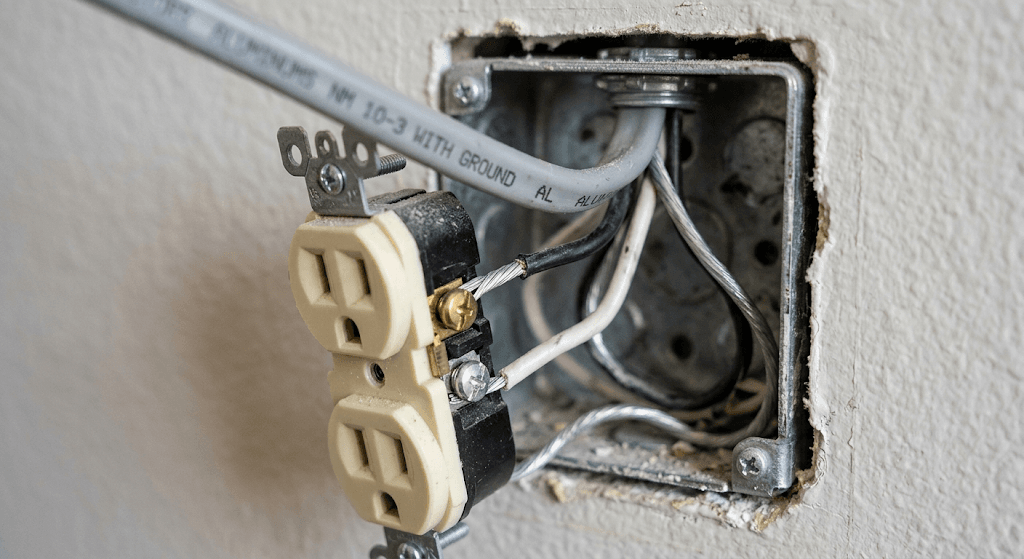
Large-gauge aluminum conductors at the service entrance, and the dedicated circuits for electric ranges and dryers, are different products designed for aluminum’s properties and are not part of the CPSC’s branch circuit concern. The concern is the smaller-gauge wire running to general-purpose circuits throughout the home.
The International Association of Electrical Inspectors notes that feeder and branch circuit systems were designed primarily for copper conductors, and that aluminum was not used heavily in residential branch circuits until 1965.
Why Was Aluminum Wiring Used?
Copper prices rose sharply in the mid-1960s, and builders turned to aluminum as a less expensive alternative. The substitution made economic sense at the time. It took years of field performance and investigation before the specific failure mode at connections became clearly documented.
The problem is not that aluminum conducts electricity badly. It is that aluminum behaves differently than copper when it heats and cools, and that difference plays out slowly at connection points.
Why Aluminum Connections Fail Over Time
| Property | What It Means for Connections |
|---|---|
| Higher thermal expansion | Aluminum expands and contracts more than copper with each heating cycle, working connections loose over time |
| Oxidation | Aluminum oxide forms on the surface of the wire. It is less conductive than copper oxide, increasing resistance at the connection |
| Creep | Aluminum moves gradually under steady pressure, loosening connections that were tight when installed |
| Higher resistance per unit | Aluminum has higher inherent resistance than copper at the same gauge, which generates more heat for the same current |
None of these properties means there is always a problem. Many aluminum-wired homes have never had an incident. What the CPSC found is that the rate of connections reaching fire hazard conditions is 55 times higher in aluminum-wired homes than in copper-wired homes. That is a risk difference, not a certainty.
Aluminum Wiring in Memphis Homes: Which Properties Are Most at Risk?
Build year is the main predictor for aluminum wiring in Memphis homes. Memphis and surrounding neighborhoods saw substantial residential construction from the mid-1960s through the early 1970s, which corresponds directly to the aluminum wiring window.
Memphis Housing and Aluminum Wiring Risk by Era
| Build Period | Branch Circuit Aluminum? | Memphis Context |
|---|---|---|
| Before 1965 | Unlikely | Older Memphis neighborhoods, pre-aluminum era |
| 1965 to 1973 | Possible | Active construction era in Whitehaven, Frayser, Raleigh, Parkway Village, older Cordova sections |
| 1974 to present | Unlikely | Manufacturers returned to copper; newer alloys and aluminum went to large-gauge uses only |
Rooms added, remodeled, or rewired during the 1965 to 1973 period in an otherwise older home can also carry aluminum branch circuit wiring. Build year of the original structure is not the only test.
How to Tell If Your Home Has Aluminum Branch Circuit Wiring
You can check a few places without opening walls. A licensed electrician can confirm the finding at the same time.
Where to Look
The panel. Open the panel cover, with the power on. The wires connecting to the breakers may be visible. Aluminum conductors look silver-gray rather than the reddish-orange of copper. The cable jacket may also be marked.
Wire markings. Aluminum cables are typically labeled “AL” or “Aluminum” on the plastic jacket. Look at any exposed wiring where it enters the panel or at junction boxes. A label marked “CU-clad” or “Copper-clad” means copper-coated aluminum, which the CPSC treats separately and does not cover under its branch circuit repair recommendations.
Outlet covers. Some inspectors find aluminum conductors by looking at the connections at receptacles or switches, with the breaker for that circuit switched off. The wire color and jacket markings are visible there too.
Property records and inspection reports. A recent home inspection report may already note whether aluminum branch circuit wiring is present.
If you are not certain what you are looking at, do not attempt to do further investigation inside the panel yourself. The CPSC recommends that if you cannot identify the wire type, you have a qualified electrician make the determination.
What Does the Risk Actually Look Like?
The CPSC’s finding is specific, and understanding its scope helps avoid both over-reaction and under-reaction.
The 55 times figure comes from a survey of outlet connections only, not from every type of aluminum connection in a home. The CPSC’s own publication notes that the survey did not address other types of aluminum wire connections and splices, which are also prone to fail.
The practical concern is heat buildup at connection points. A loose or oxidized aluminum connection carries current with more resistance than it should, which generates heat. That heat damages the insulation around the wire and can eventually ignite it or surrounding materials. The process is slow, often invisible, and does not produce the warning signs that a tripped breaker or a burned-out appliance does.
Homes with aluminum wiring that show no warning signs today still carry the underlying condition. The connections that have not failed yet have still been cycling through decades of thermal expansion and contraction.
The Three Repair Options
The CPSC’s Publication 516, Repairing Aluminum Wiring, identifies three approaches. COPALUM and AlumiConn connectors are the only connection products the CPSC currently considers acceptable for a permanent repair. Complete rewire is the most thorough option.
Aluminum Wiring Repair: Options Compared
| Option | What It Does | CPSC Position | Notes |
|---|---|---|---|
| Complete rewire with copper | Removes all aluminum branch circuit wiring and replaces with copper | Permanent repair | Most disruptive and expensive; involves opening walls throughout the home |
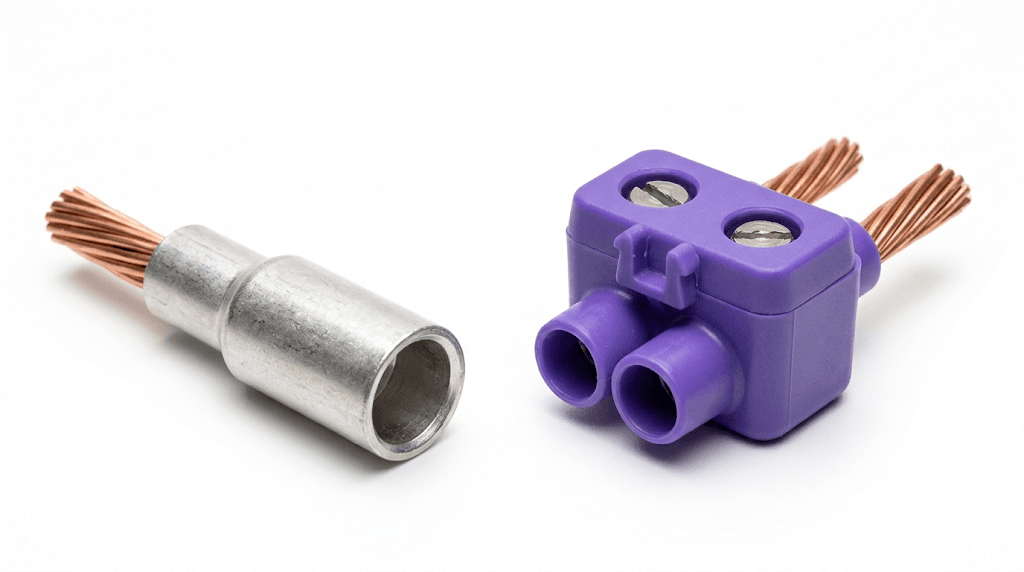
| COPALUM crimp connector | A copper pigtail wire is crimped to the aluminum wire using a specialized crimp tool | CPSC-recommended permanent repair | Requires a certified COPALUM technician with the AMP/Tyco crimp tool |
| AlumiConn set-screw connector | A copper pigtail wire is connected to the aluminum wire through a set-screw lug connector | CPSC-recognized acceptable alternative | Any licensed electrician can install; requires proper torque per manufacturer specs |
| CO/ALR rated devices | Replaces outlets and switches with devices rated for aluminum | Partial, temporary | Does not address connections inside boxes and junction points |
| Purple wire nuts (Ideal #65) | Attempts a pigtail connection using a specially filled wire nut | Not recommended by CPSC | CPSC says this method does not solve overheating at aluminum connections |
The COPALUM and AlumiConn options address the connection points throughout the home without replacing the wire itself. Each outlet, switch, and junction box is opened, and a copper pigtail is connected between the aluminum wire and the device. The devices from that point forward are on copper.
COPALUM: The Original Repair Method
COPALUM is a crimp connection system developed by AMP, now part of TE Connectivity. The crimp creates a permanent connection between the copper pigtail and the aluminum wire.
The key detail for Memphis homeowners: COPALUM can only be installed by a certified technician using the specialized crimp tool, which AMP/Tyco leases and trains installers to use. The system is not available to general electricians who have not completed the certification and obtained access to the tool.
According to a cost reference published by HomElectrical, the COPALUM crimp runs in the range of $12 to $15 per wire connection. Because each outlet, switch, and junction box in a home may have several aluminum connections, the cost of a whole-home COPALUM remediation can be substantial, though it remains less than a full rewire in most cases.
Before scheduling COPALUM, confirm that a certified installer is available in the Memphis area. Availability varies by region.
AlumiConn: The More Accessible Alternative
AlumiConn is a set-screw type connector developed by King Innovation. The CPSC added it to its recognized repair methods after testing confirmed it performs comparably to COPALUM when installed correctly.
The practical difference for Memphis homeowners is availability. Any licensed electrician can perform an AlumiConn repair. The connector itself is a lug device with separate ports for the aluminum wire and the copper pigtail, each secured by its own set screw torqued to the manufacturer’s specification.
The torque step is not optional. Insufficient torque leaves the connection loose. Overtorquing can damage the wire. The manufacturer specifies the torque setting, and a licensed electrician working with this method follows it.
AlumiConn connectors are bulkier than COPALUM, which can create space challenges in older electrical boxes that were sized for fewer wires. An electrician assessing your home can tell you whether box fill is an issue before work begins.
What About the Insurance Question?
This one requires honesty about what can and cannot be said accurately without reviewing your specific policy.
What is well documented: some insurance carriers in various markets have declined to insure, or have required remediation before insuring, homes with single-strand aluminum branch circuit wiring. An attorney’s article from Bailey Greer in Memphis specifically describes aluminum wiring as something cheap property management may overlook despite the documented fire hazard.
What cannot be stated here as universal: the specific position of your insurer, or any Tennessee-wide rule. Insurance coverage decisions are made by individual carriers under individual policies.
Before spending money on remediation, call your insurer and ask directly whether single-strand aluminum branch circuit wiring on the branch circuits affects your policy, what documentation they would want, and whether a remediation method short of full rewire satisfies their requirements. Get the answer in writing.
What Does the Memphis and Shelby County Electrical Code Require?
The county’s electrical code addresses aluminum wiring indirectly through its maintenance and hazard provisions. It requires that electrical systems be maintained in proper operating condition, and that systems constituting a fire hazard or otherwise dangerous to human life be restored to safe condition.
If a Building Official determines a system presents a hazard, the code gives authority to order corrections. It does not set a blanket remediation deadline for aluminum wiring in occupied homes, but it does provide enforcement authority where a specific hazard is identified.
Any repair work that alters the electrical system requires a permit pulled by a licensed or registered contractor. The AlumiConn and COPALUM methods, applied throughout a home, involve opening boxes and altering connections, which typically falls under that requirement. Confirm the permit scope with Code Enforcement before work begins.
For homes where the panel is also showing its age, an aluminum wiring remediation is a good time to have a panel assessment done. Ace Electric’s guide to electrical panel upgrade cost in Memphis covers what that involves.
What Should You Do If You Think You Have Aluminum Wiring?
A short sequence, done in order, avoids both panic and inaction.
- Check the build year. If the home was built before 1965 or after 1973, branch circuit aluminum is unlikely, though rooms added in the window are still worth confirming.
- Look for labels. Check the cable jacket at the panel or at any visible wiring. “AL” or “Aluminum” is the marker.
- Schedule a licensed electrician inspection. They can confirm the wiring type, identify where aluminum connections are, and assess the condition of the connection points without opening every wall.
- Call your insurer. Ask directly about their position before deciding on a repair method.
- Get itemized estimates. Ask for quotes that specify whether the work will be COPALUM, AlumiConn, or a full rewire, and whether the permit and inspection are included.
- Do not use wire nuts as a repair. Purple wire nuts were used in older attempts, but the CPSC says that method does not solve the overheating problem. If you find them already installed, include that in your electrician’s inspection.
If you are selling the home, Ace Electric’s guide to electrical upgrades before selling a house in Memphis covers how aluminum wiring appears on inspection reports and what buyers and lenders typically ask.
Frequently Asked Questions
How do I know if my Memphis home has aluminum wiring?
Check the cable jacket at the panel or at any visible wiring for a label marked “AL” or “Aluminum.” Aluminum conductors also appear silver-gray rather than the reddish-orange of copper. The most reliable confirmation is a licensed electrician inspection. If the home was built between roughly 1965 and 1973, it is worth checking.
Is aluminum wiring dangerous?
Single-strand aluminum branch circuit wiring carries a documented fire risk at connections, based on a CPSC-commissioned survey that found homes with this wiring were 55 times more likely to have outlet connections reach fire hazard conditions than copper-wired homes. The risk is at the connection points, not the wire itself, and the process of failure is gradual and usually invisible. Homes showing no current warning signs still carry the underlying condition.
What is the difference between COPALUM and AlumiConn?
Both install a copper pigtail at each aluminum connection, addressing the connection point without replacing the wire. COPALUM uses a specialized crimp and requires a certified technician with that tooling. AlumiConn uses a set-screw lug connector and can be installed by any licensed electrician at the manufacturer-specified torque. The CPSC recognizes both as acceptable permanent repairs.
Can I fix aluminum wiring myself?
No. The repair involves opening outlet boxes, switch boxes, and junction boxes throughout the home, working near live connections, and in the case of AlumiConn, torquing connectors to a precise specification. It requires a licensed electrician. Under Memphis and Shelby County’s code, work altering connections throughout the home also typically requires a permit.
How much does aluminum wiring repair cost in Memphis?
Per-connection costs for COPALUM have been reported at roughly $12 to $15. AlumiConn connectors cost less per unit, but the labor cost of opening every box in a home adds up similarly. A full rewire is significantly more expensive. This guide does not publish a whole-home total, because the number depends on square footage, outlet count, and the condition of the existing boxes. Ask for itemized estimates that include the permit.
What about CO/ALR outlets and purple wire nuts?
CO/ALR rated devices are a partial fix for the specific connections at outlets and switches, but they do not address connections elsewhere in the system. Purple wire nuts were used in older pigtailing attempts, but the CPSC says that method does not solve the problem of overheating in aluminum branch circuits and is not recommended.
Final Word
Aluminum branch circuit wiring is not an automatic emergency, and it is not something to ignore. For Memphis homeowners in homes built between roughly 1965 and 1973, the right starting point is knowing whether it is there, understanding what the CPSC-recognized options are, and making a decision based on a licensed electrician’s assessment rather than on secondhand advice.
If your Memphis home may have aluminum branch circuit wiring and you want an inspection or a remediation estimate, Ace Electric provides residential electrical inspections and repairs across Shelby County. You can reach the team at (901) 870-3298.
Curated by Ace Electric,
Your trusted electricians in Tennessee.