

Electrical red flags when buying older home in Memphis means stepping into one of the most diverse housing stocks in the South. Pre-war bungalows in Midtown, mid-century ranches in Whitehaven and Raleigh, 1970s splits in Cordova and Bartlett, and post-war cottages across Frayser all sit on the market in the same week. Each era came with different electrical materials, different safety standards, and different failure modes that decades of use have been working on ever since. A home’s build year tells you more about its electrical system than almost any other single fact. This guide covers what to look for, by decade, before you close.
Key Takeaways
- Build year is the fastest single predictor of electrical risk. Each decade in Memphis construction history has a different set of electrical concerns.
- Federal Pacific Stab-Lok and Zinsco panels, common in Memphis homes from the 1950s through the late 1970s, have documented reliability concerns and cannot accept modern AFCI breakers.
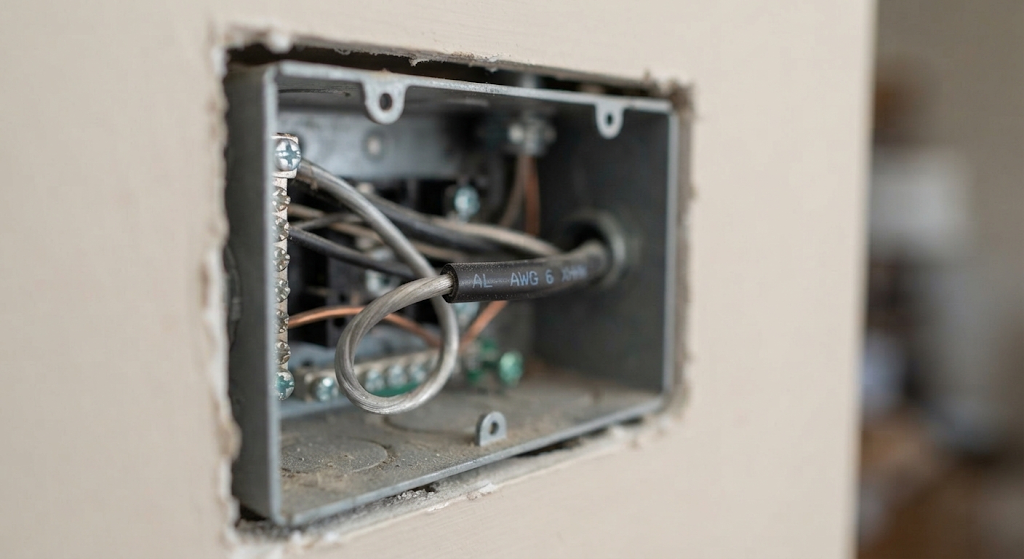
- Aluminum branch circuit wiring, used from roughly 1965 to 1973, carries a documented fire risk at connections. The CPSC found those homes were 55 times more likely to have outlet connections reach fire hazard conditions than copper-wired homes.
- A standard home inspection reviews visible electrical components but does not always identify aluminum wiring, tripped GFCI protection, or the full condition of connections inside boxes.
- A pre-purchase electrical inspection by a licensed electrician costs $150 to $350 and is a separate service from a standard home inspection.
- Most electrical problems in older Memphis homes are solvable. The question is whether the cost fits your budget and your negotiating position.
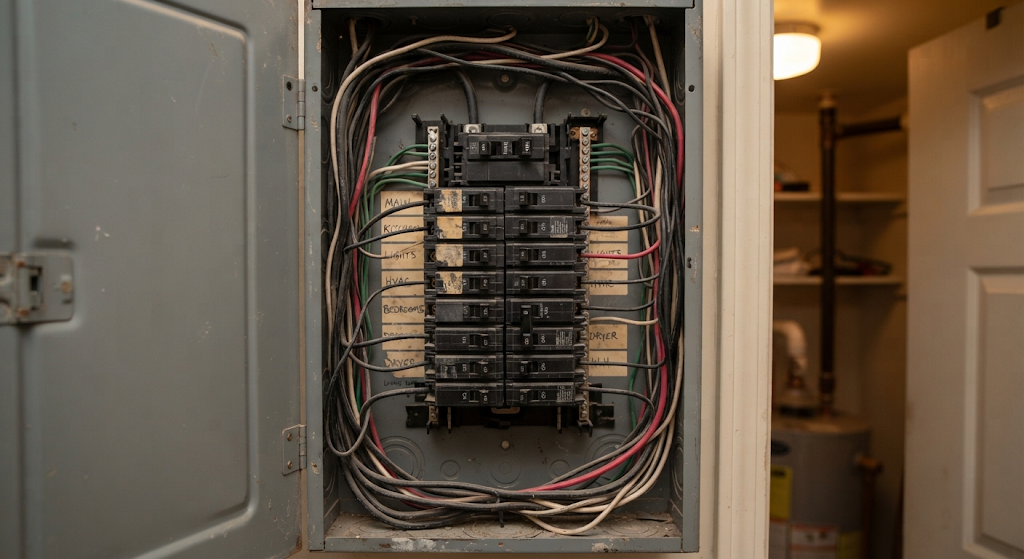
Why Memphis Specifically Demands a Different Checklist
Generic older-home electrical guides are written for a national audience. Memphis has a specific housing mix that makes some electrical concerns more common here than in most markets.
A Memphis contractor writing on BiggerPockets described it plainly: get the year built, get a photo of the inside of the panel. The build year is the starting point because Memphis construction followed national trends closely, and those trends produced a predictable sequence of wiring types, panel brands, and safety standards that any licensed electrician in this market recognizes immediately.
The city also has a climate that works against aging electrical systems. Hot, humid summers push HVAC systems , and the panels and circuits behind them , harder and longer than in most comparable markets. Connections that have been slowly loosening since 1972 feel that stress more during a Memphis August than they would in a milder climate.
Memphis Homes by Decade: What the Build Year Tells You Electrically
This table covers the electrical conditions most commonly found in each era. It is a starting point, not a guarantee. Rooms added, circuits rewired, and panels upgraded at any point change the picture for a specific house.
Electrical Risk by Memphis Home Build Era
| Build Era | Typical Panel | Typical Wiring | Key Electrical Concerns |
|---|---|---|---|
| Before 1940 | Fuse box, 60A or less | Knob-and-tube (no ground) | No ground, no GFCI possible without rewire, insurance complications, cloth insulation degrading |
| 1940 to 1964 | Early breakers, 60-100A | Cloth-sheathed or early plastic cable, copper | Two-prong ungrounded outlets, undersized service, Federal Pacific and Zinsco panels appear in this window |
| 1965 to 1973 | 100A, Federal Pacific or Zinsco common | Aluminum branch circuit wiring | Documented CPSC fire risk at connections, incompatible with AFCI breakers, insurance complications |
| 1974 to 1989 | 100A, Federal Pacific still common | Copper returns, backstab outlets widespread | Backstab connectors loosen over time, absent GFCI in most locations, panel brand concerns continue |
| 1990 to 2005 | 100-150A | Copper, screw-terminal outlets more standard | GFCI starts appearing but incomplete, no AFCI, may still have Federal Pacific or Zinsco if not upgraded |
| 2006 to present | 200A standard | Copper, modern devices | Generally meets current code; check permit records for any unpermitted modifications |
The 1965 to 1973 window is the one that generates the most conversation among Memphis buyers and investors. If you are buying in Whitehaven, Frayser, Raleigh, Parkway Village, or the older sections of Cordova and Bartlett, there is a real chance the branch circuit wiring is aluminum.
The Five Things to Check at the Panel Before You Make an Offer
You do not need a licensed electrician to look at a panel from the outside. These five observations take five minutes and tell you more than most buyers find out until the inspection report arrives.
1. The brand name on the panel.
Look for it on the door or on the breakers themselves. Federal Pacific Electric (sometimes labeled Stab-Lok) and Zinsco are the two names that warrant the most attention. Both have documented reliability concerns. Both are incompatible with modern AFCI breakers, which means any AFCI upgrade requires replacing the panel first. Neither is automatically a dealbreaker, but both change the conversation about cost.
For a full picture of what a panel replacement involves and costs in Memphis, see Ace Electric’s guide to electrical panel upgrade cost in Memphis.
2. The amperage rating.
It is usually printed on the main breaker at the top of the panel. A 60-amp service was adequate in 1950. It is not adequate in a modern home with central air, a dishwasher, a washer and dryer, and a refrigerator. A 100-amp service handles most older Memphis homes reasonably well but leaves no headroom for an EV charger, a tankless water heater, or other high-draw additions. A 200-amp service is the current standard.
3. Any signs of heat, rust, or scorch marks.
Look at the panel cover and the breakers. A little dust is normal. Rust on the panel interior, scorch marks on any breaker or the bus bar, or a burning smell are not. Any of those signals a problem that needs an electrician before you proceed.
4. How full the panel is.
A panel with no open breaker slots has no room for growth without either a subpanel or an upgrade. This matters if you plan any additions: an EV charger, a home office circuit, a finished basement, or a hot tub.
5. DIY wiring visible inside.
Mismatched breaker brands, wire nuts inside the panel, circuits not labeled, or tandem (double-stacked) breakers filling every slot all suggest work was done outside of a permit. That work may or may not be safe. It is worth knowing about before closing.
What a Standard Home Inspection Does and Does Not Cover Electrically
InterNACHI, the International Association of Certified Home Inspectors, defines a home inspection as a visual examination of accessible systems and components. That definition has real limits when it comes to electrical.
A standard home inspection checks visible wiring, the panel, accessible outlets and switches, and the presence or absence of GFCI and AFCI protection. It does not open junction boxes, trace every circuit, or look for aluminum wiring by pulling outlets from their boxes.
What inspectors commonly miss or underreport:
- Tripped GFCI protection. A tripped GFCI in a bathroom can leave multiple downstream outlets dead. An inspector testing those outlets at face value may flag them as faulty rather than identifying the upstream GFCI as the source.
- Aluminum wiring at the panel. Aluminum conductors can look like copper in certain lighting. An inspector familiar with Memphis’s housing stock will check the cable jacket labels; not every inspector does.
- Backstab outlet connections. An outlet on a backstab connector that worked at the time of inspection can fail months later as the spring clip loses its grip. Visual inspection does not reveal internal connection quality.
- Full load capacity. An inspector can tell you the panel amperage but not whether the existing circuits are already running near their rated capacity.
This is why a separate pre-purchase electrical inspection from a licensed electrician is a different service from a standard home inspection, not a replacement for it.
When a Pre-Purchase Electrical Inspection Makes Sense
Not every home purchase needs a separate electrical inspection. Some homes genuinely do.
Consider scheduling one when:
- The home was built between 1965 and 1973 (aluminum wiring era)
- The panel is Federal Pacific or Zinsco
- The home has not had a panel upgrade in the seller’s ownership period
- The inspection report flags multiple electrical deficiencies
- You plan significant additions , an EV charger, a basement conversion, a home office build-out
- The home has had any visible fire or water damage
- Permit records show no electrical work in a home that has clearly been modified
A pre-purchase electrical inspection in Memphis typically costs $150 to $350 for a licensed electrician to walk the full home, check the panel, test circuits, and identify aluminum wiring or connection concerns. That cost gives you either confidence or a list of items to negotiate before closing.
Electrical Problems and What They Cost: A Decision Framework
Finding an electrical problem in a Memphis home inspection report is not automatically a reason to walk away. It is a reason to know the cost before you decide.
Common Electrical Issues Found in Memphis Home Purchases
| Electrical Issue | Typical Fix | Estimated Cost Range | Walk Away? |
|---|---|---|---|
| Missing GFCI protection in bathrooms, kitchen, garage | GFCI installation by licensed electrician | $300 to $700 for the whole home | No. Low cost, clean fix |
| Outdated 100-amp panel, needs upgrade | Panel upgrade to 200-amp | $1,500 to $4,000 | Depends on budget. Negotiate |
| Federal Pacific or Zinsco panel | Panel replacement | $2,000 to $4,500 | Depends. Confirm scope first |
| Aluminum branch circuit wiring | AlumiConn or COPALUM pigtails, or full rewire | $1,500 to $3,500 for pigtails; more for rewire | Rarely. Solvable but costs money |
| Knob-and-tube wiring, active circuits | Full or partial rewire | $8,000 to $20,000+ for a full home | Evaluate carefully. Budget item |
| Absent AFCI in bedrooms and living spaces | AFCI breaker installation | $400 to $900 for bedrooms only | No. Routine code upgrade |
| Unpermitted electrical work | Permit after the fact, possible rewire | Varies widely | Ask for details before deciding |
For the rewiring scenarios, Ace Electric’s guide to home rewiring cost in Memphis covers what that project involves and what it typically costs locally.
The practical question for a buyer is not “is this a problem” but “what does it cost, and can I negotiate it into the price or ask for a credit.” A panel replacement is a known, manageable project. Active knob-and-tube in a 2,400-square-foot Midtown bungalow is a different conversation.
What Permit Records Tell You Before the Inspection
Permit records are publicly searchable in Memphis and Shelby County through Develop901’s permit activity search. An address with a panel upgrade permit from 2018 tells you something a panel with no permit history does not. Searching the address before the inspection period ends takes five minutes and can shape the questions you bring to the inspector.
What to look for:
- Any electrical permit in the past 15 years, and whether it was inspected and approved
- A panel upgrade permit that matches the brand and amperage of the panel you see on the visit
- Permits for additions, finished basements, or garage conversions, with matching electrical permits, not just building permits
- An absence of permits on a home with clearly modified wiring, which suggests the work was done without inspection
No permit history does not prove unpermitted work. Older permitted work sometimes predates digital records. But a home where visible modifications exist and no corresponding electrical permit is on record is worth asking about specifically during the inspection.
Questions to Ask the Seller Before the Inspection
Most sellers will answer straightforward questions about the home’s electrical history. These four are worth asking early.
- Has the electrical panel ever been replaced or upgraded? If yes, when and by whom?
- Has any electrical work been done in the past 10 years? Do you have permits for it?
- Have you had any recurring breaker trips, flickering lights, or dead outlets during your ownership?
- Is there anything the electrical inspection found last time the home was sold?
A seller who answers these questions honestly, with documentation, is a different situation from one who does not know the answers. Either way, the questions set the stage for a more focused inspection.
FAQs: Electrical red flags when buying older home
What electrical problems are most common in older Memphis homes?
The most frequently found issues in Memphis homes built before 1990 are Federal Pacific or Zinsco panels, absent GFCI protection in bathrooms and kitchens, aluminum branch circuit wiring in homes built between 1965 and 1973, ungrounded two-prong outlets in pre-1965 homes, and backstab outlet connections in 1970s and 1980s construction. Build year is the fastest guide to which of these applies to a specific home.
Should I get a separate electrical inspection when buying a Memphis home?
A standard home inspection covers visible electrical components visually. It does not trace circuits, identify aluminum wiring by opening outlet boxes, or assess connection quality inside boxes. A separate pre-purchase electrical inspection by a licensed electrician is worth scheduling for homes built between 1965 and 1973, homes with Federal Pacific or Zinsco panels, or any home where the standard inspection flagged multiple electrical deficiencies.
Is a Federal Pacific or Zinsco panel a dealbreaker when buying in Memphis?
Not automatically. Both panels have documented reliability concerns and cannot accept modern AFCI breakers, so any upgrade path requires replacing the panel. That adds a known cost to the purchase. The question is whether that cost fits in the deal. Many Memphis investors and buyers negotiate panel replacement into the price or ask for a credit. What matters is knowing the cost before you close, not after.
What does aluminum wiring mean for a Memphis home purchase?
Homes built between 1965 and 1973 in Memphis may have aluminum branch circuit wiring, which carries a documented fire risk at connections. It does not mean the home is uninsurable or impossible to buy, but it does mean the connections need a permanent repair , either COPALUM or AlumiConn pigtails throughout the home, or a full rewire. That cost should be part of the offer conversation.
Can I find out if a Memphis home has unpermitted electrical work before closing?
Yes. Develop901’s permit search covers Memphis and unincorporated Shelby County. You can search permits by address. A home with significant wiring, panel work, or additions and no permit history for electrical is worth flagging for the inspection. Unpermitted electrical work creates liability at resale and can affect insurance.
What is the most important thing to check electrically when buying a Memphis home?
Open the panel, note the brand and amperage, and look for any visible signs of heat or modification. The brand alone , Federal Pacific, Zinsco, or a modern panel , tells you more in 30 seconds than most of the visible wiring in the house. If you are not sure how to read a panel or identify a concern, that is exactly when a pre-purchase electrical inspection earns its fee.
Final Word
Buying an older home in Memphis is not a reason to walk away from a deal. Most electrical problems in this market are solvable. What they require is knowing about them before you sign, not after.
Build year gives you the first screen. A look at the panel gives you the second. A licensed electrician’s pre-purchase inspection gives you the third, and it is the one that tells you what everything costs.
If you are buying a home in Memphis, Germantown, Bartlett, Collierville, Cordova, or Millington and want a licensed electrician to assess the electrical system before you close, Ace Electric provides pre-purchase residential electrical inspections across Shelby County. You can reach the team at (901) 870-3298.
Curated by Ace Electric,
Your trusted electricians in Tennessee.