
A home electrical inspection in Memphis costs $100 to $400 for a dedicated electrical assessment by a licensed electrician, separate from the general home inspection most buyers already schedule. The two are not the same thing. A general inspector walks the whole house in 2 to 3 hours and gives the electrical system maybe 20 minutes of visual coverage. A licensed electrician doing a dedicated inspection opens the panel, traces circuits, checks wiring types, and tells you what actually needs attention and what it costs to fix. For Memphis homes built before 1980, that distinction matters a lot.
What a General Home Inspector Actually Does With the Electrical System
This is where most Memphis buyers get surprised after closing.
A general home inspector is trained to assess the entire house broadly: foundation, roof, plumbing, HVAC, structure, and electrical. Because they’re covering all of it in one visit, electrical coverage is surface-level by design. What a general inspector typically does:
- Tests a sample of accessible outlets to confirm power
- Looks at the main panel for visible signs of problems
- Notes whether the panel is a known problem brand (Federal Pacific, Zinsco)
- Checks for two-prong outlets and missing ground-fault protection in wet areas
- Flags obvious visible wiring concerns: exposed wires, improper connections at junction boxes
What they typically don’t do:
- Remove the panel cover to assess the interior wiring condition and breaker connections
- Identify aluminum wiring or assess its current state at outlets and fixtures
- Trace which circuits are on which breakers or assess overall load
- Evaluate the condition of wiring inside walls, attics, or crawl spaces
- Provide repair cost estimates for anything they flag
When a general inspector says “recommend electrician evaluation,” that’s not a suggestion you can safely skip. It means they found something beyond their scope and they can’t tell you how serious it is. That recommendation is the point where a dedicated electrical inspection earns its cost.
What a Dedicated Electrical Inspection Actually Covers
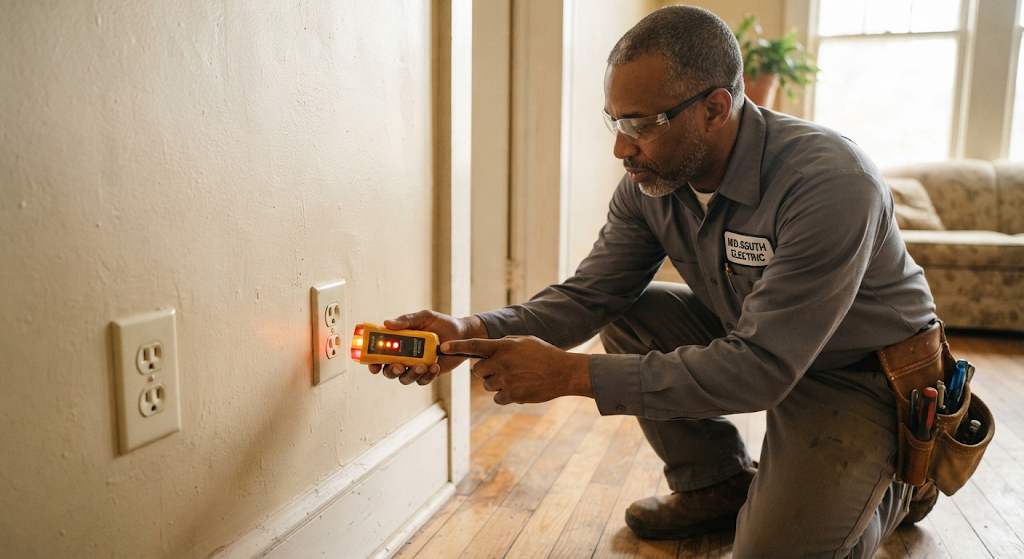
A licensed electrician doing a full electrical inspection works differently. The process runs 1.5 to 3 hours depending on the size and age of the home.
Service entrance and weatherhead. The inspection starts outside, checking where MLGW’s power enters the home. The service entrance wires, weatherhead condition, and meter base all get assessed. Storm-damaged weatherheads are common in Memphis homes after severe weather, and a deteriorating service entrance is something MLGW won’t work around.
Main panel interior. The panel cover comes off. The electrician examines the breakers, bus bar connections, grounding and bonding, wire sizing at each breaker, signs of heat damage or overloading, and whether the panel has capacity for the home’s current load. This is the step general inspectors skip, and it’s the one that reveals the most.
Wiring type identification. In Memphis homes built between 1965 and 1973, aluminum wiring was common. It’s still present in a significant number of Whitehaven, Frayser, Raleigh, and older Cordova homes. A licensed electrician confirms whether aluminum wiring is present and, if so, the condition of its connections, which is where aluminum wiring problems actually occur. Knob and tube wiring, found in pre-1950 homes in Midtown, Cooper-Young, and Binghampton, also gets identified and assessed.
Outlets and circuit testing. A sample of outlets throughout the house gets tested for proper wiring polarity, grounding, and function. GFCI protection in bathrooms, kitchens, garages, and outdoor areas gets verified against current code requirements.
Attic and crawl space wiring. Where accessible, the electrician checks exposed wiring runs for insulation condition, improper splices, and any evidence of previous unpermitted work.
Load assessment. The electrician evaluates whether the panel’s amperage is sufficient for the home’s actual use. A 100-amp panel in a Memphis home that now runs central AC, modern appliances, and potentially an EV charger may be working near its limits. This matters both for safety and for anyone planning additions or upgrades.
Electrical Inspection Cost in Memphis
| Inspection Type | Typical Cost Range | What It Involves |
|---|---|---|
| Dedicated electrical inspection | $100 to $250 | Full panel assessment, wiring check, outlet testing, written findings |
| Infrared (thermal) inspection | $150 to $350 | Identifies hot spots in wiring behind walls without opening them |
| Full home inspection (general) | $325 to $575 | Whole-house assessment; electrical is one portion |
| Re-inspection after repairs | $75 to $150 | Verifies specific findings were corrected |
According to HomeAdvisor’s 2026 cost data, the national average for a dedicated electrical inspection is $150, with most homeowners paying between $100 and $400. Memphis rates fall at or slightly below that range, reflecting Tennessee’s lower labor costs relative to the national average.
One note worth making: some electricians in Memphis include a basic electrical inspection as part of a service call or repair estimate at no additional charge. If you’re already scheduling work on the house, it’s worth asking whether the inspection is included. For pre-purchase inspections where you need an independent written assessment, a standalone fee is standard.
When Memphis Homeowners Actually Need a Dedicated Electrical Inspection
A dedicated electrical inspection isn’t something every home needs on a fixed schedule. These are the situations where it’s the right call in Memphis:
Buying a pre-1980 home anywhere in Shelby County. Memphis has a substantial stock of older homes. Midtown bungalows, Whitehaven ranch houses, Frayser post-war builds, and older Cordova developments all fall in age ranges where aluminum wiring, knob and tube wiring, 60-amp fuse panels, and two-prong outlets are common. A general inspection gives you a surface read. A dedicated electrical inspection tells you what it costs to fix and whether any of it is a deal-breaker.
When the general inspector recommends it. This is not optional language. When a home inspector writes “recommend electrician evaluation,” they found something they’re not equipped to fully assess. Book the follow-up.
Selling a home with pre-1980 construction. Sellers who address known electrical issues before listing avoid the situation where a buyer’s inspector flags problems during the option period and the deal renegotiates or falls apart. Getting ahead of it is almost always cheaper than discounting under pressure.
After a severe storm or MLGW outage. Memphis loses power to significant numbers of customers during storm season. After power is restored, the internal condition of the panel and breakers may have been affected by voltage irregularities. A post-storm electrical check covers what a visual inspection can’t see.
Insurance renewal with an older home. Some Tennessee insurers are asking for electrical documentation before writing or renewing policies on pre-1960 homes. If your carrier has flagged the electrical system, a written inspection report from a licensed Memphis electrician is what satisfies that requirement.
Before adding significant electrical load. Adding an EV charger, a new HVAC zone, a hot tub, or converting from gas to electric appliances all increase electrical demand. A pre-upgrade inspection confirms the existing panel and service can support the addition, or identifies what needs to be upgraded first.
The Most Common Electrical Findings in Memphis Homes
Memphis’s housing stock concentrates the kinds of electrical problems that show up repeatedly during inspections. These aren’t hypotheticals.
Aluminum wiring at outlets and switches. The wiring itself isn’t the hazard; the connections are. Aluminum expands and contracts more than copper, and over decades the connections at outlets, switches, and fixtures can loosen. The fix is either CO/ALR-rated devices at every connection point, or pigtailing with copper at each device. Neither is enormously expensive, but both need to be done correctly.
Federal Pacific and Zinsco panels. Both brands have documented histories of breaker failures. Memphis homes from the 1960s through the 1980s have them in meaningful numbers. Insurance companies increasingly ask about panel brand during the underwriting process, and some carriers won’t insure these panels at standard rates. Replacement runs $1,500 to $3,500 depending on service size.
100-amp service on a modern load. A 100-amp panel was considered adequate for a home in the 1960s. The same home today, running central AC, electric appliances, smart devices, and potentially an EV charger, is working that panel harder than it was designed for. Upgrading to 200-amp service costs $1,200 to $2,500 installed in Memphis.
Missing GFCI protection. Ground-fault protection in kitchens, bathrooms, garages, outdoor outlets, and areas near water is required under NEC code, but millions of older homes were wired before those requirements existed. Updating all wet-area outlets to GFCI is a few hundred dollars and a morning of work.
Knob and tube wiring under insulation. Memphis homes in Midtown and Cooper-Young frequently had insulation blown into attics over the original knob and tube wiring. That system was designed to radiate heat into open air, not sit buried under fiberglass or cellulose. It’s a documented fire risk and an insurance problem. See our knob and tube wiring guide for a full breakdown.
What Happens After a Failed Finding
An inspection that turns up problems isn’t a disaster. It’s information, and information at the right time is worth money.
For buyers, electrical findings during the option period give you grounds to negotiate. The seller can repair the issue before closing, reduce the sale price to reflect the repair cost, or offer a credit. Which outcome you get depends on the market and the severity of the finding, but you can’t negotiate what you don’t know.
For sellers, addressing electrical issues before listing typically costs less than the discount a buyer extracts once they know about them. A panel replacement that costs $2,000 to fix pre-listing might knock $4,000 off an offer once it shows up in the buyer’s inspection.
For homeowners not in a transaction, the inspection gives you a prioritized repair list. Not everything an inspection finds needs to be fixed immediately. A licensed electrician can tell you what’s a safety issue today versus what’s a code deficiency that isn’t actively dangerous. That prioritization is what makes the inspection useful rather than just alarming.
Frequently Asked Questions
How much does a home electrical inspection cost in Memphis?
A dedicated electrical inspection by a licensed electrician in Memphis typically costs $100 to $250. Infrared inspections that identify heat signatures behind walls run $150 to $350. The general home inspection that buyers schedule during the option period covers electrical as one component, but it’s a surface-level visual check, not a full electrical assessment.
Is an electrical inspection the same as a home inspection?
No. A general home inspector covers the entire house broadly in one visit. Their electrical coverage is a visual check of a sample of outlets, the panel exterior, and obvious wiring concerns. A dedicated electrical inspection by a licensed electrician opens the panel, identifies wiring types, assesses circuit load, and provides specific repair findings. For any Memphis home built before 1980, they’re not interchangeable.
When should I get an electrical inspection before buying a Memphis home?
Any time the general inspector recommends electrician evaluation, the home was built before 1980, the home has a fuse box rather than breakers, two-prong outlets are present throughout, or you can see visible signs of older wiring types. Memphis’s pre-1950 and pre-1970 housing stock makes dedicated electrical inspections more important here than in markets with newer homes.
Will an electrical inspection find problems inside my walls?
A standard electrical inspection is a non-invasive visual assessment and doesn’t involve opening walls. An infrared (thermal) inspection can identify hot spots behind drywall without cutting into it, which is particularly useful for identifying overloaded circuits or deteriorating connections. If specific wiring concerns require physical investigation, that becomes a separate repair or assessment scope.
Can an electrical inspection affect my homeowner’s insurance?
Yes, in two ways. Some insurers require an electrical inspection or documentation before writing or renewing policies on older Memphis homes. And some carriers ask specifically about panel brands, wiring types, or service amperage during underwriting. Having a written inspection report from a licensed electrician can satisfy those requirements. If your insurer has flagged your home’s electrical system, an inspection report is typically what resolves it.
How long does a home electrical inspection take in Memphis?
A dedicated electrical inspection on an average Memphis single-family home takes 1.5 to 2.5 hours. Older homes with more complex systems, fuse panels, or wiring concerns take longer. The written report is usually delivered the same day or within 24 hours.
Bottom Line
The difference between a general home inspection and a dedicated electrical inspection isn’t a technicality. It’s the difference between a visual check of the panel cover and someone opening it up. For Memphis homes built before 1980, which covers most of Midtown, Cooper-Young, Whitehaven, Frayser, and large sections of Raleigh and older Cordova, the electrical system is old enough to have issues that don’t show on the surface.
An electrical inspection costs $100 to $250 and takes a couple of hours. What it produces is a clear, written picture of what the system actually contains, what needs attention, and what it costs to fix. That’s worth having whether you’re buying, selling, or just trying to understand the house you’ve owned for years.
For electrical inspections in Memphis, Germantown, Collierville, Bartlett, and Shelby County, Ace Electric provides written assessments from licensed electricians who work in Memphis homes daily. Call (901) 870-3298 or visit electricmemphis.com to schedule.
For related topics, see our guides on aluminum wiring in Memphis homes, knob and tube wiring in Memphis, and electrical panel upgrade costs.
Curated by Ace Electric,
Your trusted electricians in Tennessee.